Case Study: Dizziness Associated With Neck Movement
A clinical case study examining recurrent dizziness associated with neck movement, assessment considerations, conservative care, symptom recurrence, and follow-up outcomes.
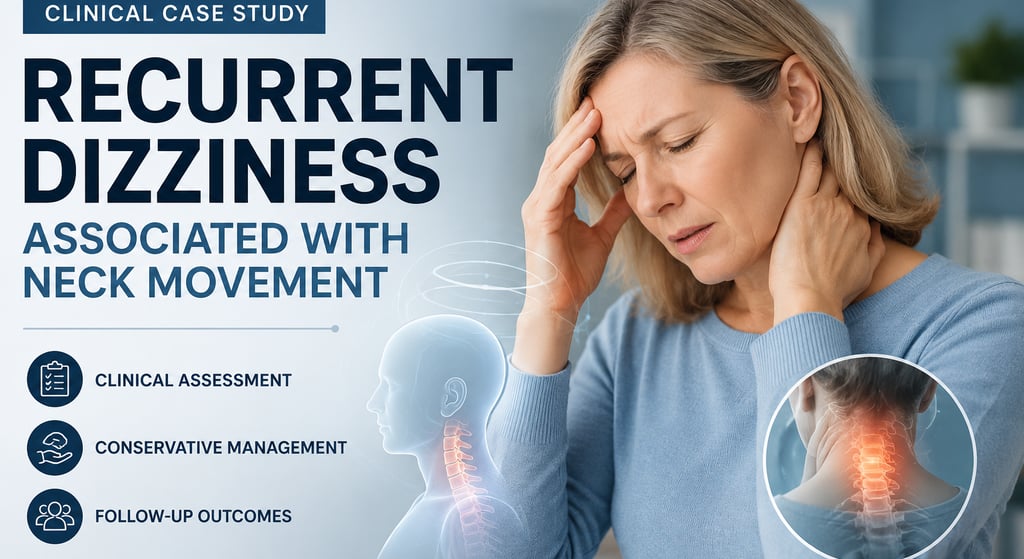
Clinical Case Study: Recurrent Dizziness Associated With Neck Movement — An Observational Conservative Management Case
Background
Dizziness and vertigo are common clinical presentations and may arise from multiple systems including vestibular, neurological, cardiovascular, visual, medication-related, and musculoskeletal contributors.
Because of the broad differential diagnosis and the possibility of more serious underlying conditions, appropriate assessment and referral remain important.
This observational case describes a patient presenting with recurrent dizziness associated with neck movement following previous medical evaluation.
The purpose of this report is not to establish diagnosis or causation, but to describe the clinical presentation, assessment process, conservative management approach, and patient-reported outcome.
Patient Presentation
A female in her early sixties working in the service industry presented with recurrent episodes of severe dizziness occurring almost daily.
Episodes were described primarily as:
Spinning sensation
Temporary disequilibrium
Sensation of instability
Each episode generally lasted less than one minute but occurred frequently enough to affect confidence and routine daily activities.
The patient reported repeated prior hospital presentations because of symptom severity and recurrence.
Associated symptoms included:
Bilateral neck discomfort, greater on the right
Upper cervical stiffness
Neck discomfort aggravated by prolonged upward viewing and neck movement
The patient denied:
Headache
Tinnitus
Hearing changes
Visual disturbance at initial presentation
Facial symptoms
Upper limb symptoms
Weakness
Slurred speech
Sensory changes
The patient additionally reported occasional transient balance disturbance occurring during vigorous household activity and symptom provocation.
These episodes were not described as spontaneous events occurring at rest.
Previous Medical Assessment
Prior to presentation, the patient reported previous assessment through multiple healthcare settings including medical, ENT, and neurological evaluation.
According to the patient, CT and MRI imaging had previously been performed.
The patient reported that no major structural cause had been communicated following prior workup and that the working description remained vertigo.
No confirmed vestibular diagnosis was available at presentation.
Clinical Assessment
Assessment focused on understanding symptom behaviour while recognising the broad differential diagnosis associated with dizziness.
Findings documented at presentation included:
Dizziness reproducible with rapid cervical rotation
Symptoms triggered during cervical extension and upward gaze
Dizziness reported during standing and walking when accompanied by neck movement
Mild overall cervical motion restriction
Reduced upper cervical rotational mobility identified clinically
Upper cervical stiffness extending into the upper thoracic region
Additional screening findings included:
Dix–Hallpike: negative
No observable nystagmus during assessment
Neurological screening findings documented at assessment did not identify features considered to require immediate escalation at that encounter.
Given the symptom relationship with cervical movement and previous medical evaluation, cervical contribution to symptom presentation was considered as one possible clinical consideration.
These findings were not considered diagnostic.
Conservative Management Approach
Given symptom behaviour and the presentation at assessment, a conservative management approach was selected.
Management included:
Gentle low-velocity manual techniques directed to the upper cervical region
Cervical mobilisation
Simple neck movement exercises
Advice to temporarily reduce excessive cervical extension and rapid neck loading during daily activities
High-velocity cervical thrust techniques were intentionally not performed.
One treatment session was provided.
Initial Outcome
Following management, the patient reported resolution of the dizziness episodes that prompted consultation.
Follow-up contact approximately six months later indicated that the patient reported no recurrence of the original symptom pattern during that period.
The patient additionally reported:
Return to driving
Return to normal daily activities
Reduced concern regarding symptom provocation
No further intervention was reported during this interval.
Follow-Up Observation: Recurrence After New Mechanical Exposure
Approximately seven months after the initial presentation, the patient returned with recurrence of a broadly similar symptom pattern, although subjectively reported as more severe than the original episode.
The patient reported symptom onset following vigorous overhead household activity involving sustained neck extension.
The patient also described a separate recent event involving sudden neck loading while attempting to prevent a fall.
At reassessment, the patient reported:
Mild dizziness
Neck discomfort
Pulling discomfort extending into the shoulder region
Intermittent visual blurring
Because this presentation differed from the initial episode and involved additional symptoms, management strategy was modified.
High-velocity intervention was again not selected.
Management consisted of:
Gentle Grade II cervical mobilisation
Supportive conservative care
Activity modification advice
Following management, the patient reported substantial symptom reduction.
Follow-up several days later indicated symptoms remained improved by patient report.
Because symptoms had recurred with a changed presentation, the patient was advised to seek further medical evaluation should symptoms persist, worsen, recur, or become associated with additional neurological or other concerning symptoms.
Further investigation was discussed where clinically indicated.
No diagnosis was established during this follow-up encounter.
Clinical Discussion
Dizziness associated with neck symptoms remains clinically complex.
Some clinical models propose that altered cervical sensory input may contribute to dizziness in selected presentations through interaction with postural and sensory processing systems.
However, current evidence does not support establishing causation from examination findings alone, and such presentations remain dependent on broader clinical assessment and exclusion of alternative explanations.
This case demonstrated a temporal association between conservative management and symptom improvement.
However, multiple alternative explanations remain possible, including:
Natural symptom variation
Behavioural modification
Reduced exposure to provoking activities
Effects of previous medical care
Spontaneous improvement
Multifactorial recovery
Accordingly, no direct treatment effect or causal conclusion can be drawn from this observation.
Clinical Observation
The presenting clinician notes that another patient with a broadly similar presentation has also been encountered in practice.
That additional observation involved dizziness occurring alongside neck symptoms and subsequent symptom improvement following conservative management.
However, that observation is not analysed in this report and should not be interpreted as evidence of reproducibility, effectiveness, or generalisability.
Formal case series methodology would be required before broader conclusions could be considered.
Key Takeaways
Dizziness requires broad assessment and appropriate exclusion of serious causes.
Symptoms associated with neck movement may warrant consideration of multiple contributors.
Conservative management may be considered in selected presentations where clinically appropriate.
Symptom improvement does not eliminate the need for reassessment if symptoms recur.
IMPORTANT DISCLAIMER
This article reports a single observational clinical case and is presented for educational purposes only.
Clinical details have been modified where appropriate to preserve patient privacy.
Although symptom improvement was reported and another clinically similar presentation has been observed in practice, these observations do not establish that neck dysfunction caused dizziness, nor do they demonstrate that conservative management was responsible for recovery.
The duration of symptom relief cannot be predicted and recurrence remains possible.
This case included a later recurrence episode with a different symptom profile and a more cautious management approach.
This report must not be interpreted as proof of treatment effectiveness, a guarantee of outcome, or a substitute for medical evaluation, diagnosis, or treatment.
Patients experiencing dizziness, visual changes, unexplained falls, speech disturbance, severe headache, worsening symptoms, or new neurological symptoms should seek appropriate medical assessment.
Individual outcomes vary.
Published with identifying details modified to preserve patient privacy.