Case Study: Progressive Spondylolisthesis and Spina Bifida Occulta — When Conservative Treatment Was Deferred
An 18-year-old woman sought a second opinion for persistent lower back pain. Imaging review identified spina bifida occulta and progressive spondylolisthesis, prompting a patient-specific decision to defer chiropractic treatment and reinforce ongoing orthopaedic management and activity modification.
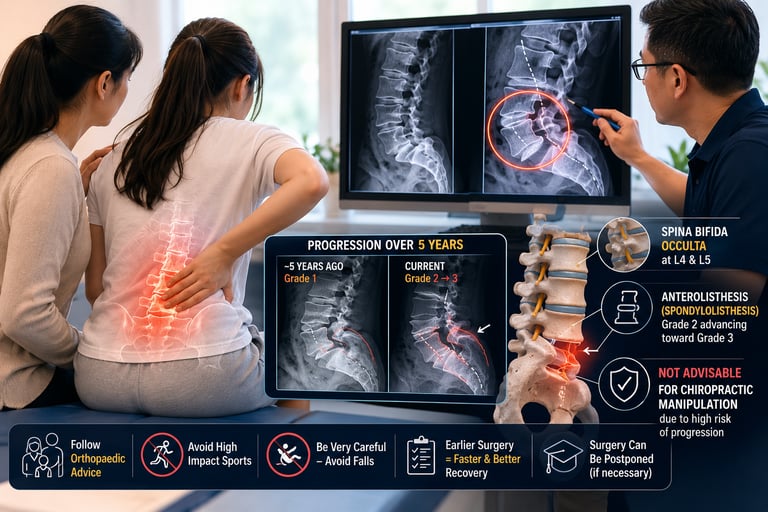
Case Study: Second Opinion for Progressive Spondylolisthesis and Spina Bifida Occulta — When Conservative Treatment Was Deferred
Background
Not every patient presenting with lower back pain is an appropriate candidate for conservative manual therapy. Careful clinical assessment and review of existing imaging are essential to identify structural conditions that may require specialist management rather than hands-on intervention.
This observational case highlights the importance of recognising when patient safety is best served through education, activity modification, and continued orthopaedic follow-up instead of chiropractic treatment.
Patient Presentation
An 18-year-old woman attended the clinic with a parent seeking a second opinion for persistent lower back discomfort.
The patient described aching pain and fatigue across the lower back without major neurological symptoms at the time of consultation. Existing lumbar spine radiographs were available for review.
No treatment was performed during the consultation.
Imaging Review
Review of the available radiographs demonstrated findings consistent with spina bifida occulta involving both the L4 and L5 vertebral levels, together with significant anterior vertebral translation consistent with spondylolisthesis.
Based on visual assessment of the provided imaging, the degree of vertebral slippage appeared to be approximately Grade II progressing toward Grade III.
According to information provided during the consultation and prior imaging history, the vertebral slip had reportedly progressed over several years from a lower-grade presentation to a substantially more advanced stage.
Clinical Decision-Making
After considering the imaging findings, reported progression, patient age, and existing orthopaedic recommendations, the decision was made not to proceed with chiropractic treatment.
In this individual case, the apparent progression of vertebral slippage and the structural abnormalities observed raised concern that manual intervention directed at the affected lumbar segments might not represent the most appropriate management strategy.
Instead, the patient and parent were advised to continue follow-up with the treating orthopaedic team and to carefully consider specialist recommendations regarding ongoing care.
This decision reflected a patient-specific risk assessment and should not be interpreted as applying to all individuals with spondylolisthesis or spina bifida occulta.
Discussion Regarding Surgery and Activity
During the consultation, the patient asked whether any proposed surgical management could reasonably be delayed because of academic commitments.
The discussion emphasised that decisions regarding surgery should remain under the guidance of the treating orthopaedic specialist. If surgery were deferred, the patient was advised to minimise activities that could expose the lumbar spine to excessive mechanical stress, including high-impact sports, heavy loading, or situations with an increased risk of falls.
General advice focused on protecting spinal stability, remaining vigilant for worsening symptoms, and maintaining regular specialist follow-up.
Clinical Reflection
An important aspect of responsible musculoskeletal practice is recognising when not to provide treatment.
Although many patients with lower back pain respond well to conservative management, some structural presentations warrant a cautious approach in which education, imaging review, and specialist referral take precedence over manual intervention.
In this case, the consultation centred on explaining the imaging findings, reinforcing orthopaedic management, and supporting informed decision-making rather than attempting symptomatic treatment.
Key Clinical Lessons
Existing imaging should be carefully reviewed before initiating treatment.
Progressive structural abnormalities may alter the suitability of conservative manual therapy in individual patients.
Decisions regarding surgery and long-term management should be guided by the treating specialist team.
Activity modification and avoidance of unnecessary spinal loading may be appropriate while awaiting specialist care.
Recognising when to defer treatment can be as important as recognising when to provide it.
Important Disclaimer
This article presents an anonymised observational clinical case for educational purposes only.
The management decisions described were based on the specific clinical circumstances, available imaging, patient history, and information provided during consultation.
This report should not be interpreted to mean that all patients with spina bifida occulta or spondylolisthesis are unsuitable for conservative care or require surgery. Management should always be individualised based on symptoms, neurological findings, imaging, stability, and specialist assessment.
Readers experiencing persistent back pain or known spinal abnormalities should seek evaluation from appropriately qualified healthcare professionals.